
More Than a Coffee Shop: How One Seattle Café Is Turning Barista Training Into a Career Path

More Than a Coffee Shop: How One Seattle Café Is Turning Barista Training Into a Career Path
September 22, 2026
What if a coffee shop could be more than a place to buy coffee — and instead become a place where people get their first real opportunity to build a career?
In Seattle, Coffee TAB is turning that idea into an operating model. The nonprofit coffee shop combines specialty coffee with a workforce-development programme designed to help young adults facing barriers to employment. This week, the organisation opened a new location in Seattle’s Central District, in a space previously occupied by Starbucks.
It is a story that matters to the coffee industry not because of a new coffee variety or espresso machine, but because of a different question:
What can a coffee shop do beyond serving the cup?
Eight to Twelve Weeks Behind the Bar
At the centre of Coffee TAB’s model is an 8–12 week apprenticeship programme.
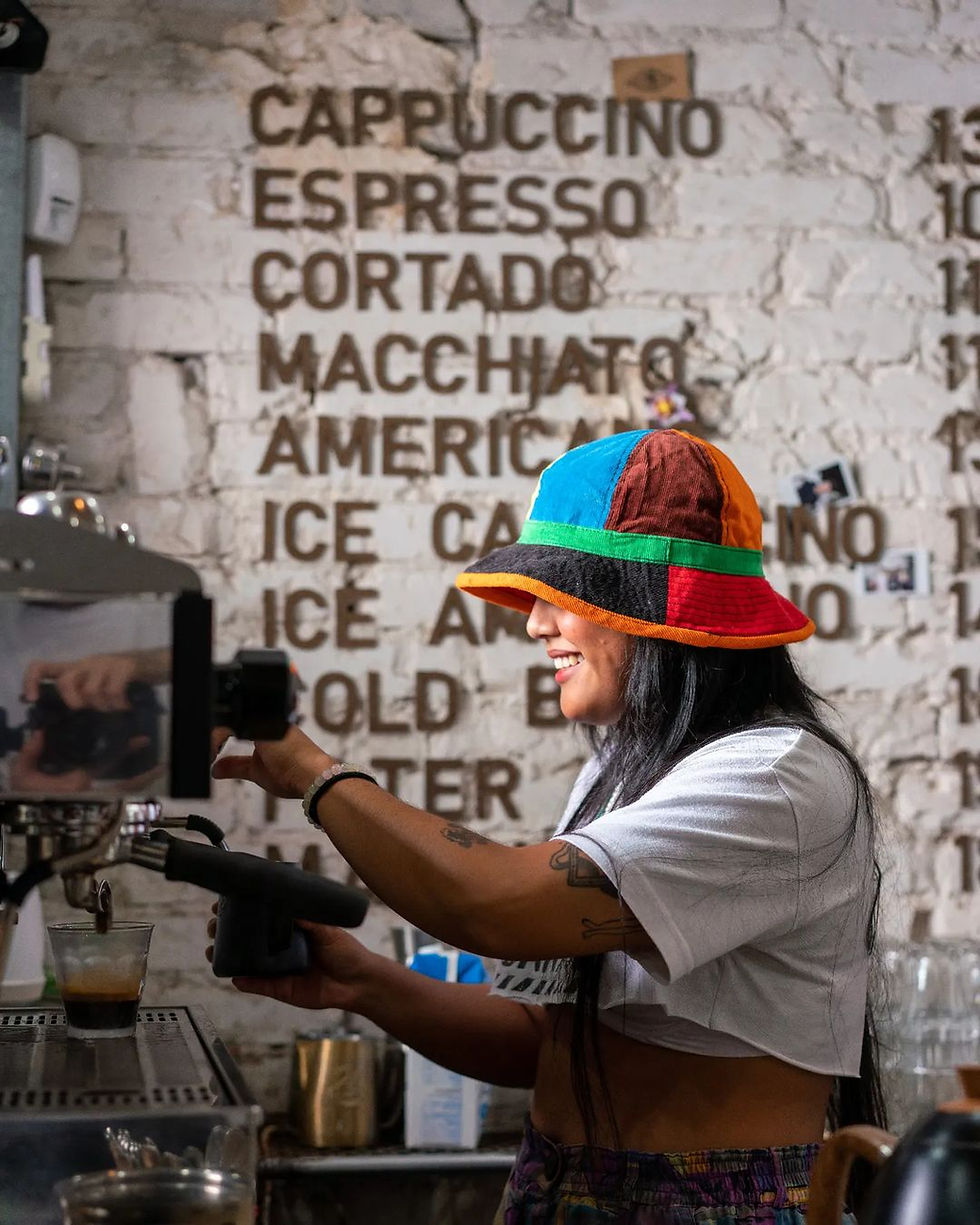
Apprentices do not simply learn how to pull espresso shots or steam milk. According to the organisation, they receive paid, hands-on experience as baristas while also learning customer service, workplace communication, job applications, interview preparation, personal finance and other skills needed to enter the workforce.
In that sense, coffee becomes a learning tool.
Apprentices work in a real café, with real customers, professional equipment and the responsibilities that come with an actual job.
It is not a simulation.
It is work.
A New Café Opens in a Space That Sat Empty for Years
On September 21, 2026, Axios reported that Coffee TAB opened a new location at 2300 S. Jackson St. in Seattle’s Central District. The storefront had been vacant for around four years following the departure of Starbucks.
The new café is already the organisation’s third location in Seattle.
But for Coffee TAB, it is more than another point of sale.
The organisation describes its cafés as places where coffee, community and professional development come together. The fact that the new café occupies a storefront that had remained empty for years also gives the project a local dimension: a coffee shop has returned to the neighbourhood, but with a business model designed to create value beyond selling beverages.
Who Joins the Programme?
Coffee TAB works with young people who face different barriers to employment.
According to the organisation, participants are referred through school counsellors, social workers and community organisations. Some apprentices have experienced housing instability, the foster-care system or other circumstances that can make entering the workforce more difficult.
The goal is not simply to teach a trade.
It is to create an environment where a young person can show up for work, develop practical skills, receive mentorship and begin building professional experience.
When the Apprentice Becomes the Manager
One of the most interesting parts of the model can be seen in what happens after the apprenticeship.
Coffee TAB says that 23 apprentices have completed its programme, with some going on to leadership roles such as Shift Lead and General Manager. At the new Central District café, all five initial staff members had completed the organisation’s apprenticeship programme, including the general manager.
That changes what an apprenticeship can mean.
Instead of a programme that begins and ends after several weeks of training, it can become a longer-term development path within the coffee industry.
Entry-level barista → experience → responsibility → management.
And the entire journey can happen within the same organisation.
What About the Coffee?
Despite its social mission, Coffee TAB puts significant emphasis on coffee quality.
The organisation describes itself as a nonprofit specialty coffee shop, serving specialty coffee as part of its operating model. Its programme also includes blends and rotating single-origin coffees sourced through Fulcrum Coffee Roasters, which maintains direct relationships with coffee farmers.
That may be one of the most important parts of the model.
If the goal is to prepare baristas for today’s coffee industry, training cannot stop at pressing a button on an espresso machine.
Baristas need to understand coffee.
They need to understand service.
They need consistency.
They need to understand customers.
And they need to understand how a café operates as a business.
A Coffee Shop as a Classroom
There are countless barista courses and workshops around the world, but Coffee TAB offers a somewhat different model.
Training takes place inside a functioning café.
An apprentice might learn about coffee in the morning, work through a busy service later in the day, collaborate with a team and see firsthand how small decisions affect the customer experience.
In that sense, the café becomes the classroom.
The espresso machine becomes a training tool.
And the customer becomes part of the lesson.
Why Does This Matter to Specialty Coffee?
The coffee industry talks constantly about quality — bean quality, water quality, roasting, equipment and brewing.
But there is another form of quality that is much harder to measure:
the quality of the people behind the bar.
A good barista needs to know much more than how to follow a recipe. They need to understand the raw material, work consistently, communicate with customers and respond to unexpected situations.
That is why strong professional training can influence not only an employee’s career, but also the level of service and coffee a café can deliver.
Coffee TAB is attempting to connect the two:
good coffee and professional opportunity.
Could This Be the Next Direction for Coffee Shops?
A coffee shop is one of the few places where very different people can repeatedly meet without needing a special occasion.
Someone stops in before work.
Someone else studies.
A new barista starts their first shift.
A young manager learns how to lead a team.
And a customer simply wants a good espresso.
At Coffee TAB, all of those things happen in the same space.
That turns the café from a place that sells a beverage into a place that can create skills, experience and human connections.
Perhaps that is one of the most interesting developments in modern coffee culture: not only asking what is in the cup, but also asking what that cup makes possible behind the bar.
🔗 Sources
Coffee TAB – Official Websitehttps://www.coffeetab.org/?utm_source=chatgpt.com
Coffee TAB – About & Missionhttps://www.coffeetab.org/about-us?utm_source=chatgpt.com
Coffee TAB – Apprenticeship Program
Axios – Coffee TAB opens in Seattle's Central District
South Seattle Emerald – Coffee TAB and its youth apprenticeship model


Comments